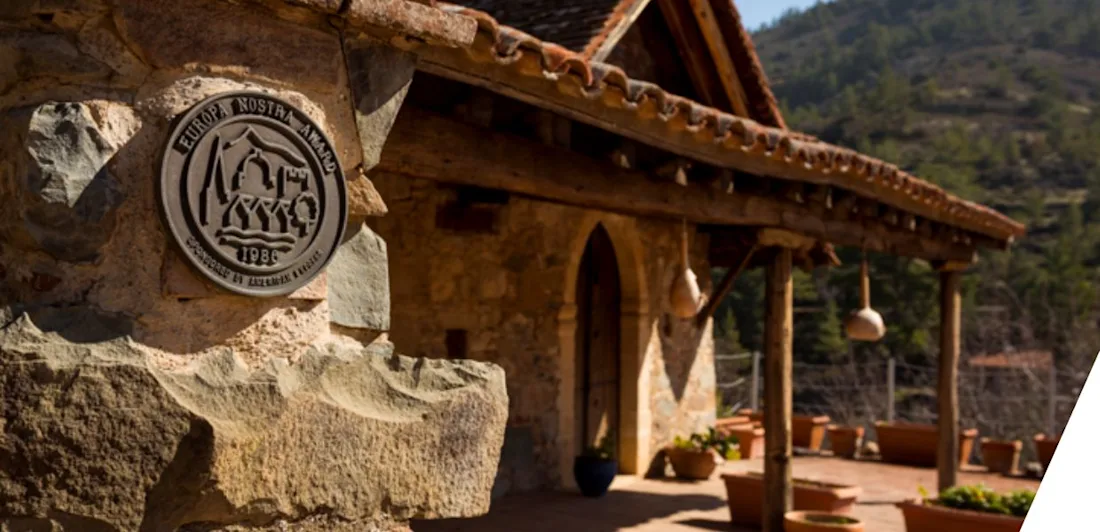
In the heart of Cyprus lies a village frozen in time, where every cobblestone tells a story and every weathered wall whispers secrets of generations past. This is Fikardou, a quaint settlement nestled amidst the island's rugged terrain, standing as a testament to the enduring spirit of cultural heritage.
Despite its serene atmosphere, the village faced challenges in the mid-20th century due to urban migration, resulting in a dwindling population. This led to many historic buildings becoming abandoned, threatening the further existence of the town. Recognising the urgency of preservation, the Cypriot Department of Antiquities took charge of the village in 1978, declaring it an ‘Ancient Monument’ and establishing strict regulations through a ‘Controlled Area’ designation.
In 1984, a comprehensive revitalisation effort was launched, focusing on the restoration of dilapidated structures and the enhancement of the village's infrastructure. These endeavours have received recognition, with Fikardou now proudly listed on the tentative UNESCO World Heritage Sites roster, underscoring its cultural significance and potential for global acclaim.
3D preservation breathes new life into Fikardou
Following the revitalisation effort started in 1984, the Cypriot Department of Antiquities launched a 3D scanning and preservation call for Fikardou Village, which was taken up by the Cyprus University of Technology.
The UNESCO Chair on Digital Cultural Heritage team at the university of Cyprus (CUT) used technology such as LIDAR Scanning, 360° photography and drone photography to capture the intricate details of Fikardou's built and natural environment. This initial phase was critical in creating a comprehensive multimedia digital representation of the village.
The same preservation team in Cyprus have provided a 3D model to the Twin It! 3D for Europe’s culture campaign, which invited EU Ministries of Culture to submit at least one 3D digitised heritage asset to the common European data space for cultural heritage. The same technologies used to digitise Fikardou village were used to preserve the Cypriot submission, the Lambousa boat, which is now available in 3D on Europeana.eu.
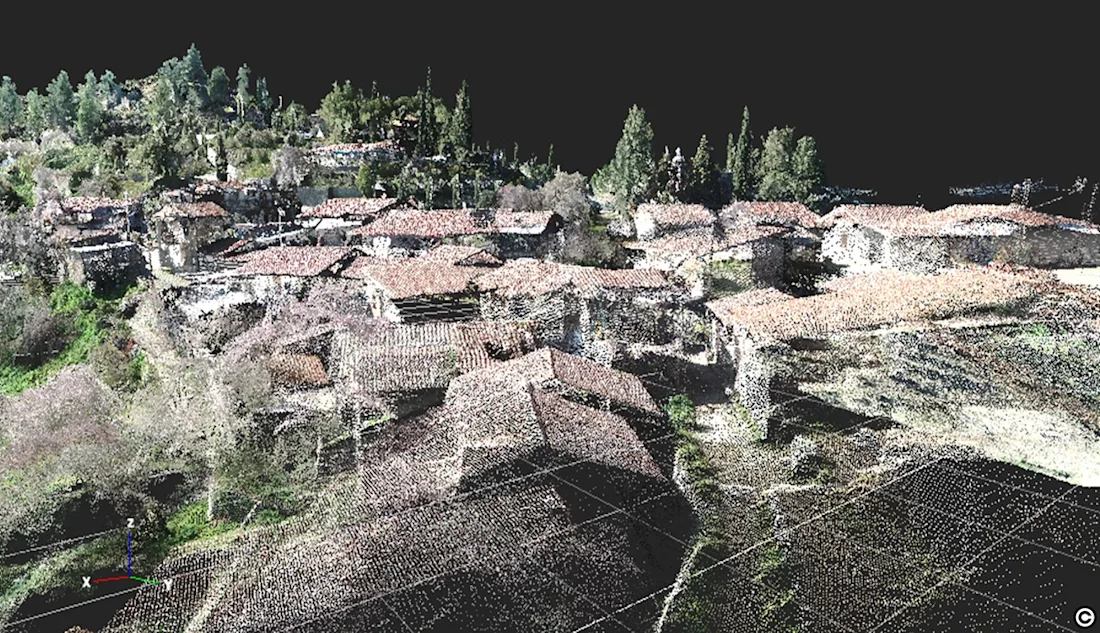
Structuring digital information
3D data modelling played a pivotal role in structuring the digitised information. By establishing clear relationships between data entities and attributes, data models ensured the coherence and accessibility of the village's digital archives.
Central to the preservation efforts was also the implementation of digital preservation strategies that follow international best practices, to ensure the longevity and accessibility of Fikardou's digital materials.
The preservation team engaged with the community, conducting interviews with the village’s remaining inhabitants. These interviews were invaluable in capturing the intangible heritage of Fikardou, including stories, traditions, and cultural practices passed down through oral tradition. Each voice added depth to the digital archive, weaving together a rich tapestry of intangible heritage that defines the village's unique identity.
All of the preservation efforts culminated in an online platform which shares Fikardou's cultural legacy to a global audience. Through immersive virtual tours, interactive exhibits, and educational resources, the platform serves as a dynamic portal for engaging with the village's rich history and architectural splendour.
The impact of 3D digitisation
The work of the CUT team stimulated economic growth in the local community by revitalising heritage tourism. Since the inception of the preservation project, there has been a remarkable surge in visitors to Fikardou, with over 100,000 exploring the village by the end of the year. The eFikardou platform has played a significant role as well, with 62,037 online visits recorded in December 2023 alone, with 89.5% originating from Cyprus.
Hopes and dreams for 3D and digital cultural heritage
Our vision for 3D and digital cultural heritage is one of continuous innovation and accessibility. We envision a future where these technologies serve as powerful tools for preserving, documenting, and sharing cultural heritage on a global scale. Within the common European data space for cultural heritage, our dream is to see seamless integration and collaboration, enabling easy access to digital resources across borders.
We aspire to create a digital landscape where cultural heritage is not only preserved but also actively celebrated and shared, fostering greater understanding and appreciation of our diverse European heritage. Through ongoing collaboration and technological advancement, we aim to ensure that future generations inherit a world where the past is not only preserved but also accessible and alive.
Find out more
Visit the eFikardou platform to explore the initiative and the village, and read more about the potential of 3D for digital cultural heritage on Europeana Pro. The Cyprus University of Technology is an active partner in the Eureka3D project, which aims to further the 3D digitisation and access to 3D cultural heritage in Europe.