
After months of work and preparation, we are excited to announce the launch of the AI4Culture platform, a capacity-building platform designed to help cultural heritage institutions harness the power of artificial intelligence. This platform will feature a suite of AI tools tailored to meet the diverse needs of these institutions.
At its core, AI4Culture aims to repurpose and customise existing digital components, making them more accessible and user-friendly for cultural heritage professionals. The tools will be packaged and presented in an interface to ensure seamless integration, allowing institutions to adopt and reuse them without requiring detailed technical expertise.
One of the platform’s unique aspects is its commitment to open-source principles. AI4Culture will provide a variety of datasets from the cultural heritage sector, available under an open-source license, to foster collaboration and innovation. These datasets can be used to train and test AI models, empowering organisations to customise and fine-tune tools according to their specific needs.
Open source AI tools, datasets and upskilling resources
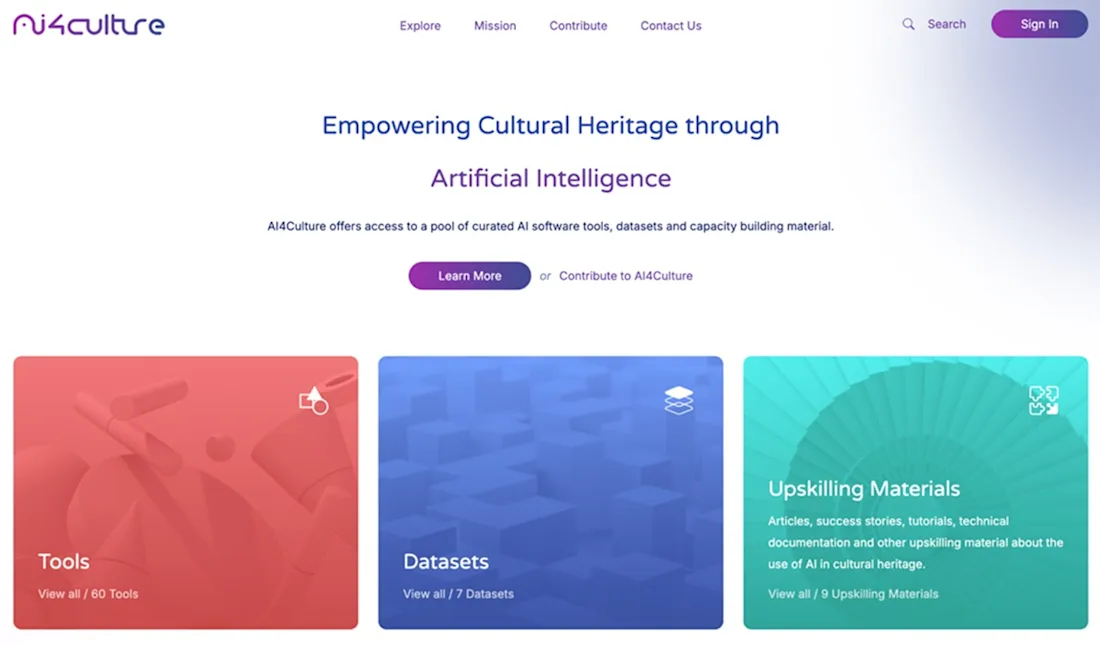
The platform consists of three main sections. The first is about Open Source AI Tools designed for cultural heritage institutions to automate and optimise various tasks, such as transcription, image analysis, subtitling and metadata enrichment. These tools, provided by technical partners in the AI4Culture consortium, are compatible with Europeana.eu and other components of the data space for cultural heritage. Additionally, a selection of more than 50 tools from external providers relevant to cultural heritage tasks are registered on the platform with appropriate documentation.
The second section collects Cultural Heritage Datasets for training, testing, and evaluating AI models, facilitating their customisation and fine-tuning to meet the sector’s unique characteristics and needs. An initial set of these datasets has been collected, normalised and made available through the platform.
The third part, Upskilling Resources, gathers resources that accompany the tools and datasets, including articles discussing various applications, tutorials and more.
Users can leverage the advanced search functionality to explore resources based on criteria such as the AI technologies used, the types of data processed and the applications related to their needs. Additionally, users can register new resources on the platform to raise awareness of their work.
What will the platform do for cultural heritage institutions?
AI4Culture is more than just a technological tool. To bridge the knowledge gap, the platform will continually be enriched with new resources, including guides, tutorials, and best practices to support cultural heritage professionals in their AI journey. The project will also host a series of capacity-building activities designed to raise awareness of the potential of AI techniques in the cultural heritage sector. These activities aim to provide professionals with hands-on experience, ensuring they can confidently navigate and utilise the tools available on the platform.
In this framework, the project is also organising a series of workshops on the use of AI tools present on the platform - find out more and register.
Help us to make the platform more dynamic
AI4Culture aims to become a key enabler for the cultural heritage sector, opening new horizons for heritage preservation, research and engagement. Join us on this exciting journey to empower cultural institutions to preserve, manage, and innovate with AI! You can engage with the community by leaving comments under resources that interest you. Share your questions or insights, or contribute to ongoing discussions. You can also contribute and register new tools, upskilling materials, and datasets that could benefit the cultural heritage community. To do this, simply register on the platform, click on your user icon in the upper right corner, select ‘Resources,’ and then click the ‘Submit’ button. Dedicated forms will guide you through the information you need to provide.