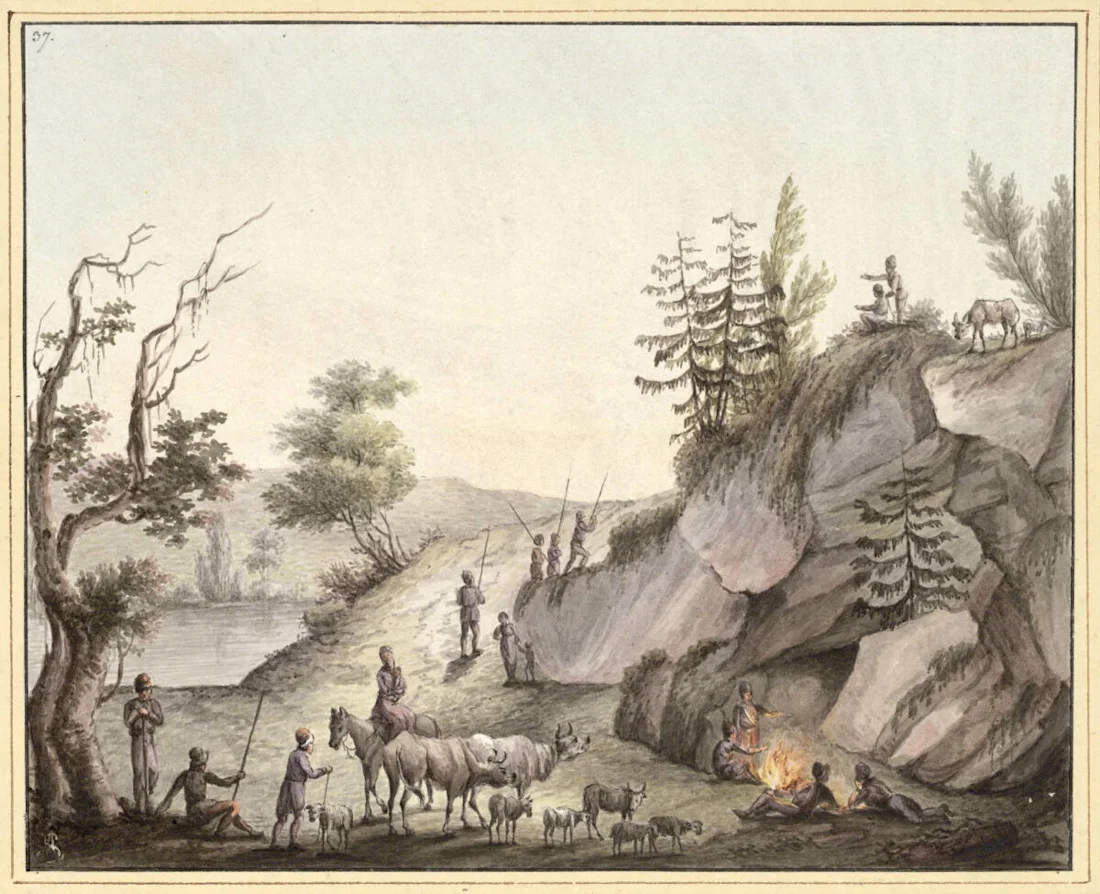
As generative technologies rapidly reshape how images, narratives and knowledge are produced, cultural heritage institutions face a pivotal question: what role does trusted, authentic cultural data play in an era of synthetic abundance?
As content can be created instantly and at scale, provenance, context and historical grounding help ensure that experimentation remains meaningful. Cultural heritage provides the depth, credibility and continuity that make this possible.
This is where the cultural heritage data in the common European data space for cultural heritage via Europeana.eu meets the storytelling approach of MagnificentH, the home to hundreds of micro-museums. By integrating with Europeana's APIs, MagnificentH enables users to discover and incorporate trusted cultural heritage materials into personal, original narratives — placing historical content within contemporary storytelling contexts, alongside images contributed by users or drawn from MagnificentH’s connected cultural media partners.
Cultural heritage as a reusable resource
Europeana.eu provides access to millions of digitised cultural heritage records from thousands of institutions across Europe. Through the Europeana APIs, this material becomes a reusable resource by allowing other websites, apps and digital tools to automatically access and use it in their own services.
But access to digitised cultural heritage alone is not enough. The ability to place cultural heritage materials in a meaningful context is what transforms data into storytelling.
MagnificentH, a platform founded in Sweden out of frustration with context-poor social networking platforms, uses Europeana’s structured metadata and open APIs (specifically the Search API) to present cultural objects together with the information needed to understand them more deeply. Through more than 150 micro-museum stories, users can explore the origin and historical background of an item, learn about its creator, date, and collection context, combine it with their own visual material, and place it within contemporary themes or personal narratives.
In addition to Europeana’s collections, MagnificentH also integrates images from major U.S. museums, including the Cooper Hewitt Smithsonian Design Museum and the Smithsonian American Art Museum, with further integrations planned in the near future.
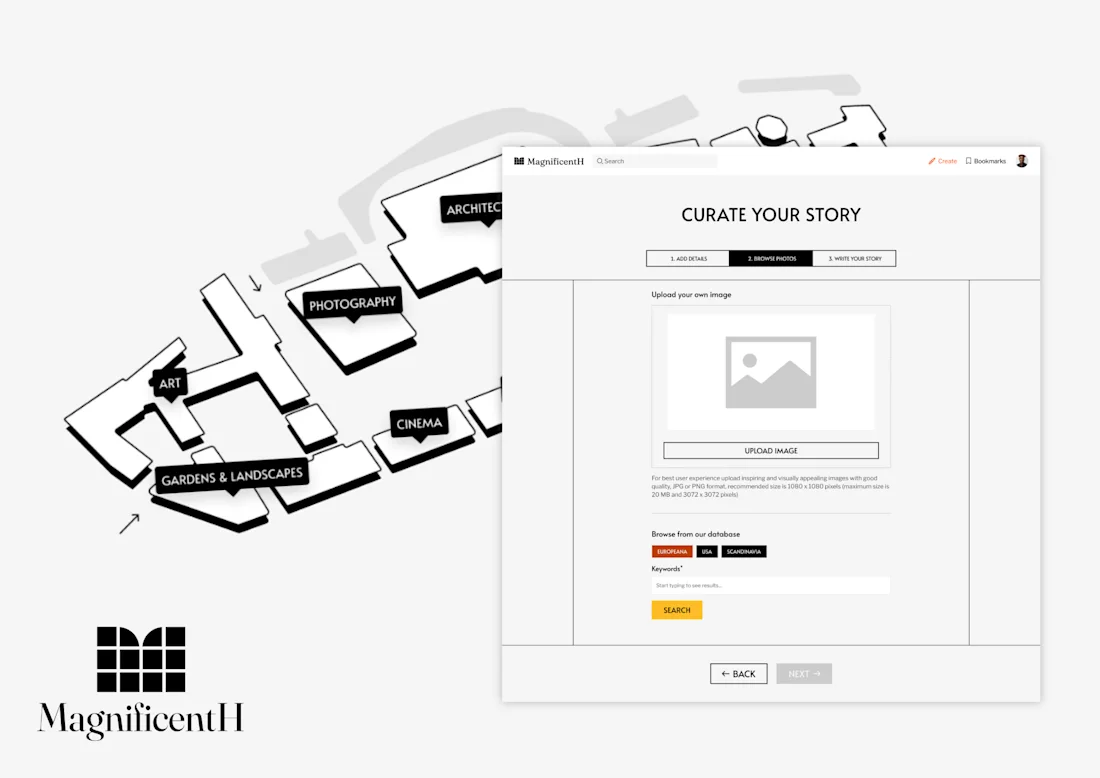
The blending of cultural heritage content with self-created imagery allows for a powerful shift: cultural heritage becomes a co-creative resource. By exploring thematic connections across time and geography, and reinterpreting artworks and historical images in modern visual narratives, users move beyond passive viewing and towards active engagement.
The Europeana Foundation has curated four micro-museums on the MagnificentH platform, ranging from neon signs and Oulu, the European Capital of Culture in 2026 to artists such as Ramon Casas i Carbó and Anna Ancher. These micro-museums are currently viewable for account holders only - join the platform to view these micromuseums as well as create your own.
Anna Johansson, CEO of MagnificentH, says, ‘Gen-Z don't want to just consume historical culture, they're eager to understand it, and discuss how it links to their interests today. From Taylor Swift's Fate of Ophelia to John Everett Millais's Ophelia.’
Expanding reuse across multiple audiences
One of the broader goals of the common European data space for cultural heritage is enabling reuse across sectors, disciplines and creative practices. By making high-quality cultural heritage data openly accessible and technically interoperable, the data space supports not only access, but active engagement and cross-sector innovation.
The partnership between Europeana and MagnificentH illustrates how this vision takes practical form. When cultural heritage data is combined with intuitive creative tools, it becomes a resource that can be meaningfully applied in a wide range of contexts.
For educators, the platform offers opportunities to embed authentic cultural objects into teaching materials, encouraging students to engage directly with primary sources and explore historical context through creative assignments.
For creative practitioners — including designers, visual artists and storytellers — it provides trusted source material that can be reinterpreted, remixed and situated within contemporary narratives, while maintaining clear links to provenance and institutional collections.
For researchers and cultural professionals, it demonstrates how structured metadata and open APIs can support experimentation, digital exhibitions and new interpretative formats that connect collections with broader audiences.
Across these use cases, the principle remains consistent: cultural heritage data gains value when it is reused thoughtfully and placed into a meaningful dialogue with the present. By supporting this kind of engagement, the data space strengthens an ecosystem in which heritage is not siloed, but continuously reinterpreted and shared.
A shared commitment to meaningful reuse
For MagnificentH, integrating cultural heritage data is not simply a technical enhancement; it is a way to ground creativity in context and shared memory. Anna Johansson highlights that, ‘Our community deeply cares about how things are created and why. We offer them a place for democratised dialogue, where quality storytelling reigns supreme.’
By connecting open cultural heritage data with creative practice, the collaboration reinforces a central principle of the data space: access is only the beginning. What matters equally is how data is reused — responsibly, contextually and imaginatively.
As the data space continues to evolve, collaborations like this demonstrate that the future of digital heritage is not only about scale or automation — it is about empowering people to create meaning.
Get involved
Are you interested in using Europeana’s APIs to integrate cultural heritage data into a tool or product? Find out more and get an API key.