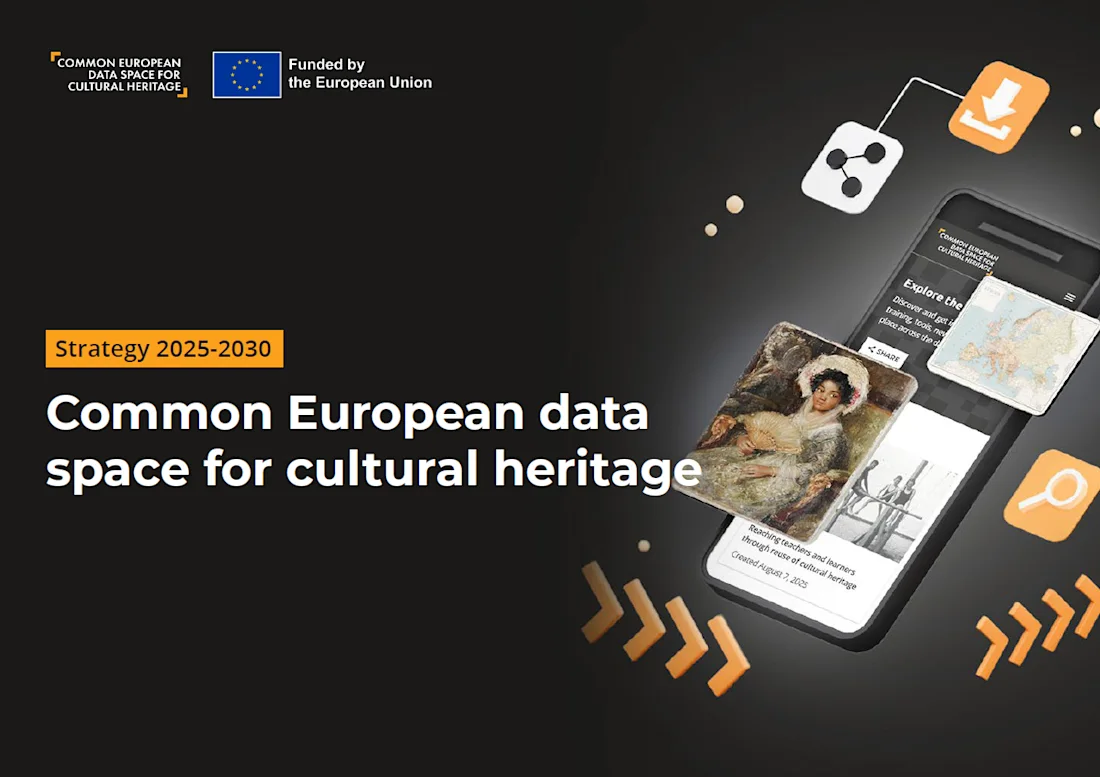
The common European data space for cultural heritage Strategy 2025-2030 sets out the vision and priorities for the data space towards 2030. It presents a shared vision developed collaboratively by the European Commission, Member States - via the Expert Group on a common European Data Space for Cultural Heritage (CEDCHE) - and the Europeana Initiative. Read on to explore what the coming years hold for the data space.
A shared vision
The Strategy sets out a shared vision to develop a data space that continues to open up and democratise access to cultural heritage; improves the flow of data to support value creation, innovation and competitiveness in Europe; adapts to the needs of participants and technological developments, and engages a diverse community while serving an ethical, human-centred digital transformation of the sector.
It sets a path forward to continue developing and upscaling the data space on top of existing strategic infrastructure, capitalising on the work of the Europeana Initiative for the past two decades and ensuring the continued value of earlier investments, all while adding new capabilities and functionalities and aligning with core European data space principles and the sector’s needs.
Three priorities and three cross-cutting themes
The strategy identifies three priorities:
Develop a robust and interoperable data space infrastructure while increasing the diversity and quality of the data offer. This involves expanding both the amount and diversity of data and sharing mechanisms in the data space, enabling cultural heritage institutions to have more control of how they share their data. It also includes ensuring interoperability with other data spaces, as well as European, national and regional initiatives to facilitate data exchange. It places particular emphasis on increasing multilingual, high-quality content, 3D datasets and other enriched data types.
Facilitate access to heritage data to boost reuse across existing and new audiences, markets and sectors, as well as across other data spaces and cultural heritage initiatives. The data space will serve diverse audiences, from cultural heritage professionals and researchers to data scientists, AI developers and curious users. Cultural heritage data will be valuable for training European AI systems, ensuring that Europe’s cultural richness and linguistic diversity are represented in AI models.
Support the digital transformation of the sector through capacity building, networking and innovation. The goal is to empower professionals and institutions to both contribute to and benefit from the data space, strengthening the community’s capacity to drive scalable and sustainable change. This includes accelerating the responsible adoption of emerging technologies such as AI, XR, 3D and linked open data. A focus on capacity building and inclusion will ensure that all institutions, regardless of size, have access to digital tools and training.
Three cross-cutting themes — AI, 3D and multilingualism — with deep implications for the deployment, scaling up and success of the data space are present in the objectives of all three priorities.
A shifting context
This strategy is particularly relevant in today’s context. A shifting geopolitical landscape and worsening climate conditions call to plan ahead and strengthen resilience and security to safeguard our shared l heritage data resulting from digitisation efforts from all across Europe. Access to data sits at the heart of the European Commission’s AI Continent Action Plan, which aims to leverage artificial intelligence to boost Europe’s competitiveness while upholding its values and addressing the risks posed by AI. The development of the data space is also one of the flagship actions in the Culture Compass, the EU’s strategic framework for culture - signaling new ambitions for it.
At the same time, the strategy continues to support the digitisation targets set out by the European Commission Recommendation on a common European data space for cultural heritage of 2021, and build on the achievements of the Europeana Initiative since its launch in 2008.
Strategy in action
In 2026, we will take concrete steps to advance the three thematic priorities and three cross-cutting themes of the data space strategy 2025–2030. Read how the Europeana Foundation will drive this work forward in 2026 through concrete actions in Business Plan 2026.