
How can the common European data space for cultural heritage truly support educators? A recent co-creation workshop with members of the Europeana Network Association (ENA) Education Community explored this question by bringing together one of Europeana's most active audiences to share their experiences and imagine future possibilities.
The workshop, ‘Educators in the data space: a bottom-up approach,’ gathered practitioners who regularly use the digital cultural heritage made available through Europeana.eu in classrooms, mediation and educational projects. Using a design-thinking methodology, participants reflected on how educators currently engage with digital heritage and co-developed ideas for making the data space more relevant, accessible, and impactful for learning environments.
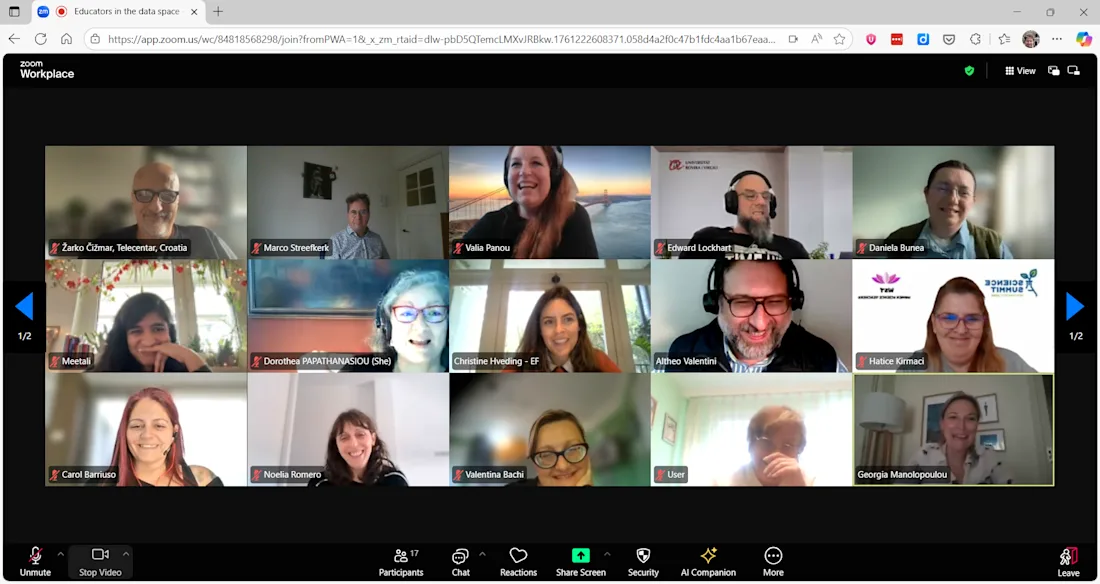
Discussions highlighted a strong enthusiasm for the potential of digital cultural heritage to inspire storytelling, critical thinking and cross-disciplinary learning. At the same time, educators shared practical challenges they face in their daily work. These include difficulties in navigating and searching for relevant content under the time constraints typical of teaching, as well as finding curriculum-specific resources and clear licensing guidance for reuse.
The co-creation session also resulted in innovative ideas for strengthening the educational value of the data space. Participants pointed to opportunities such as AI-supported tools that enhance search and discovery, collaborative environments where educators and cultural heritage professionals can co-create resources, and expanded training opportunities to help educators confidently integrate cultural heritage into their practice.
In light of recent technological developments and the growing use of AI in the education sector, a central theme emerging from the workshop was the importance of combining technological innovation with cultural intelligence. Participants emphasised that digital tools should support authentic interpretation, ethical engagement with heritage, and inclusive narratives in education.
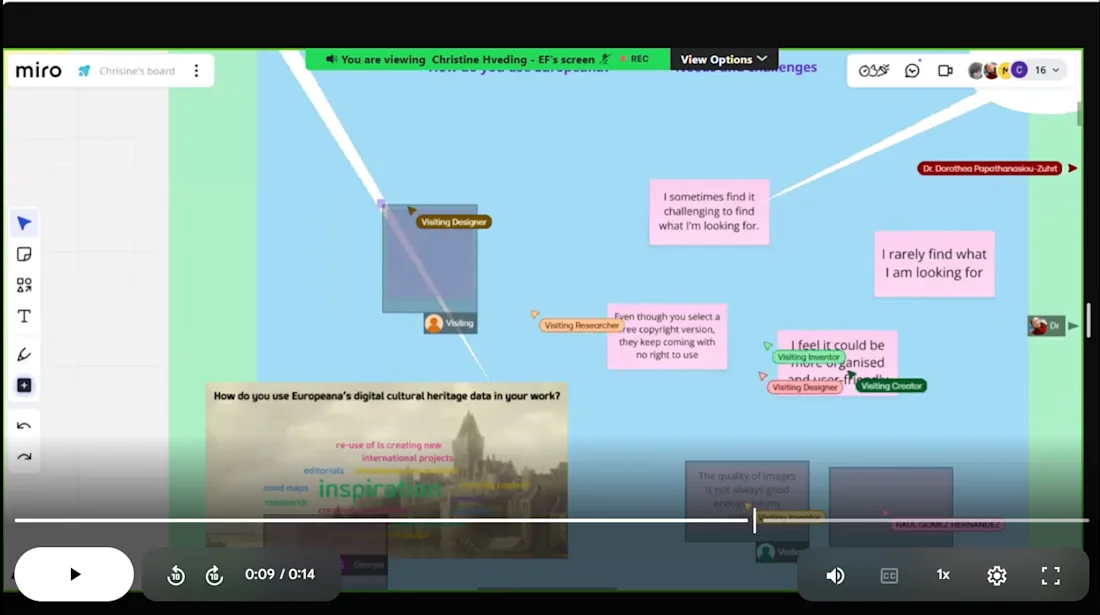
In the report and recommendations paper resulting from the workshop, the Education Community’s Steering Group outlined potential actions to implement the insights that emerged. The report therefore provides a roadmap for enhancing the common European data space for cultural heritage, addressing the challenges and real needs of one of its key specialised audiences, and positioning the data space as a vibrant ecosystem for knowledge creation and reuse.
Read the full report to explore the recommendations and ideas generated by the community, and discover how educators can help shape the future of the cultural heritage data space.