I’m a teacher - can I copy and use anything I find on the web for educational purposes?
Certain educational uses of copyright protected works – such as films, music, books, and images – are allowed in most EU countries. Many educational institutions hold licences that allow their staff and students to use protected materials in certain ways. At the same time, copyright law offers various opportunities to reuse existing materials without permission, such as using works that are in the public domain or protected works under copyright exceptions. You are also free to use works distributed under Creative Commons licences. The rights statement you can find below each item available on the Europeana website is a good starting point to understand what you can do with the work.
I found an incredible video for my lessons on YouTube. Can I use it?
As with any other copyright material, videos on YouTube can be used either with permission from the copyright owner (usually the creator of the video) or under copyright exceptions. The Standard YouTube Licence only allows users to watch or listen to the content for personal, non-commercial use. However, if you want to screen a YouTube video for educational purposes (for example, to prompt a discussion with your students on certain topics), this is likely to be allowed by copyright exceptions.
Some videos on YouTube are distributed under Creative Commons licences, meaning that anyone can reuse them under certain conditions. Another great source of audiovisual content that can be used in the classroom is EUscreen, which offers free online access to thousands of items of audiovisual heritage covering landmark events from the 20th and 21st centuries.
When and how should I credit the author/source of audiovisual media? Can you give me some examples?
It is always good practice to credit the author and source of the audiovisual content you use for educational purposes. It is often also legally required; in addition to economic rights, in most jurisdictions authors hold moral rights such as the right of attribution, that is the right to be identified as the author of the work. Certain copyright exceptions explicitly require acknowledgement of the authors. All Creative Commons licences also require attribution. So whether you are using an audiovisual work with permission from the copyright owner (for example, under a CC or other licence), under a copyright exception or because copyright in the work has expired, it is always advisable to credit the authors of the work.
When using Europeana items, credits should include the title of the work and its authors, the date of creation, the source (institution and country providing the item) and type of licence or copyright status (e.g. Public Domain). You can see an example of how this could work in practice below.
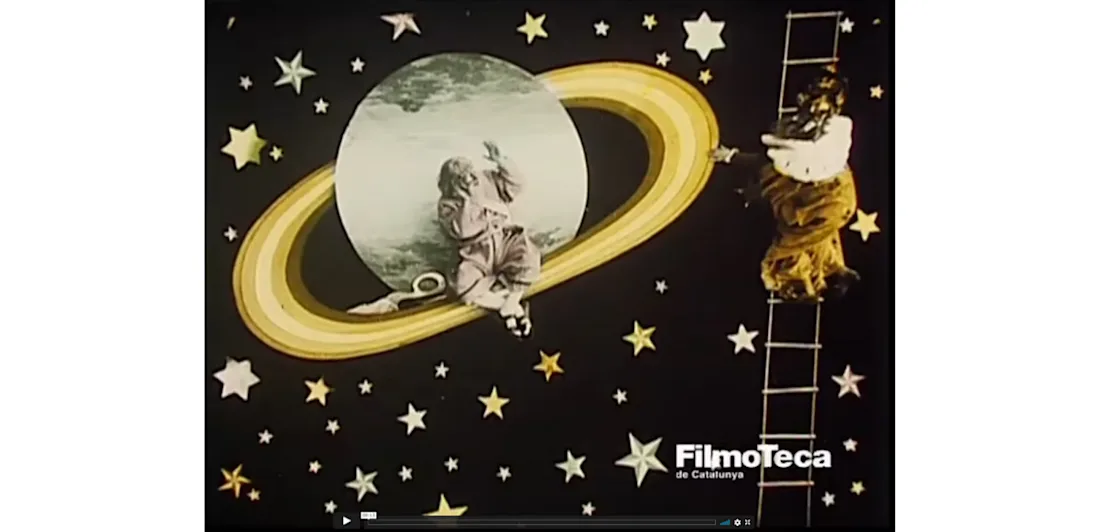
Beyond legal considerations, it is always good practice to cite, reference, and point others toward where they can find the source materials you have used, so that other teachers can use them too. The Europeana website has a new functionality that helps you do just that. When you download an item from the Europeana website, you will automatically get a message providing the relevant information to include in the credits. You can also find usage guidelines for metadata here.
What are copyright exceptions? Is copyright forever?
Copyright does not last forever. In most EU countries, copyright protection generally lasts for 70 years after the death of the author (or of the last surviving author in the case of a work of joint authorship). After that, the works of the author enter the public domain and everyone can use them for free. As they rely on more recent technological developments, most films and television programmes from the 20th century are still protected by copyright. However, some great old films such as those by Georges Méliès are in the public domain in many jurisdictions.
Copyright exceptions are cases in which under certain circumstances one can use copyright protected works without permission from the copyright owner. These uses are permitted by law because they are considered to be socially, culturally, politically or economically beneficial. Education is one of them. However, as with the public domain, copyright exceptions are territorial and vary from country to country. You can check which copyright exceptions apply in your country using the interactive map CopyrightExceptions.eu, developed by Kennisland and currently being updated by COMMUNIA. The Horizon 2020 consortium ReCreating Europe is also working with COMMUNIA to map copyright exceptions in the EU, and is currently developing the EU version of the CopyrightUser.org website.
Where can I find open source materials I can use without having to worry about copyright?
The Europeana website is a great starting point. It gives you access to millions of books, music, artworks and more, clarifying the copyright status of each item with rights statements and Creative Commons marks. On Europeana Classroom you can also find many educational resources and learning scenarios that use digital culture freely available on Europeana.
Other sources of free to use materials include:
Wikimedia Commons: a collection of over 75 million images, sound and videos that are freely usable under Creative Commons and other open licences.
Wikibooks: a collection of thousands of open-content textbooks that anyone can edit.
Flickr and Pixabay: offer many images that are free to use under Creative Commons or other open licences.
Prelinger Archives: a collection of over 60,000 films (mostly 'ephemeral') that are in the public domain in the US.
Incompetech: royalty-free music recorded by Kevin MacLeod.
NASA content: works produced by the US federal government are generally not protected by copyright. These include most of the images, audio and videos created by NASA.
Open Content Toolkit: created by the ENA Education community member Theodore Kuechel.
For a full overview of the FAQs, visit the Europeana Task Force on Audiovisual Material in Europeana Classroom page.
Bartolomeo Meletti is Education and Research Executive at Learning on Screen (UK) as well as Creative Director for the CREATe Centre at the University of Glasgow. Rafael Montero is a Secondary Math Teacher at Colegio Corazón de María (Spain) and the Europeana Teacher Ambassador for Spain.