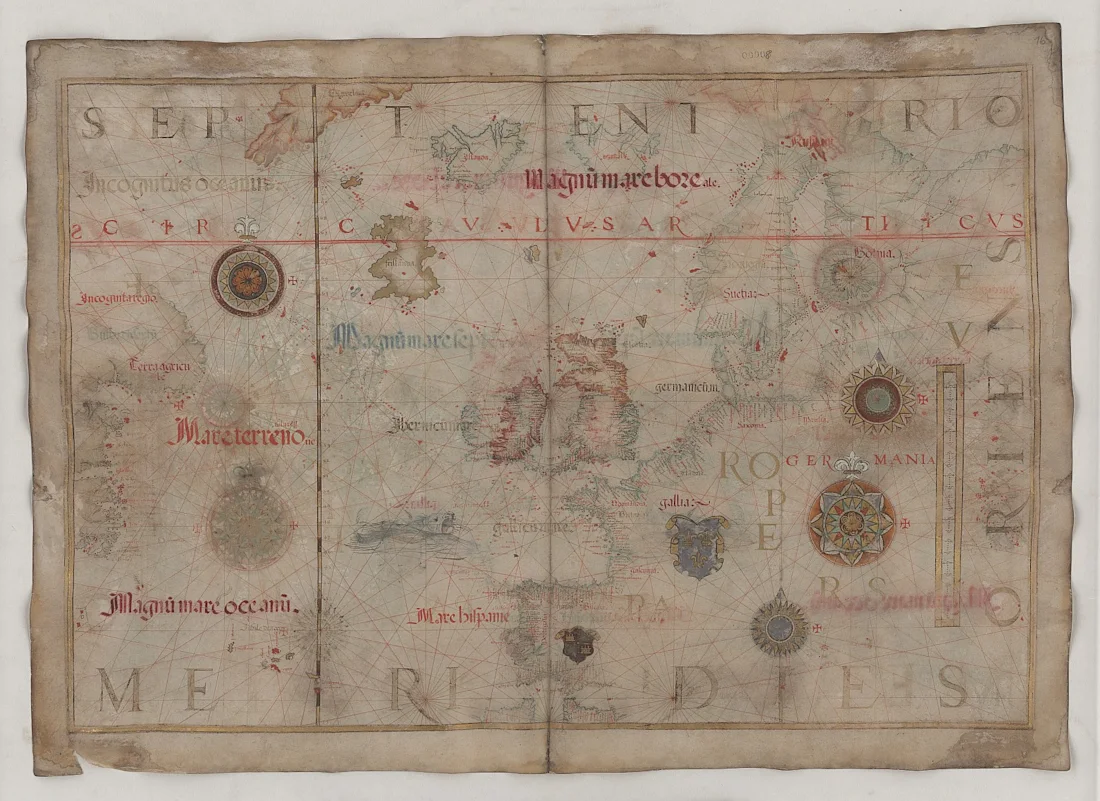
As the quantity of information available on the internet continues to grow, alternative ways of navigating it are beginning to emerge. Moving beyond familiar interfaces built on filters, keywords and lists, these approaches rethink how information can be grouped and explored. They allow users not only to find what they are looking for, but to encounter what they didn’t know existed—making unexpected connections and thinking in ways that are not predefined.
At the Europeana Foundation, we are aware of a growing number of projects that experiment with these ideas. Through their integration with the Europeana APIs, projects such as Anorak and 10m offer unique ways of exploring cultural heritage collections. In both cases, navigation becomes organic, less structured and more open to interpretation.
10m: starting from emotion
The platform 10M introduces a form of emotional navigation, allowing users to explore artworks from a feeling rather than a keyword. It was developed by designer Paul Jun, based in New York, USA, who was looking for a platform that allowed a more intuitive discovery of art. For those who are less guided by language and more by intuition, exploring artworks by feeling can feel like a more natural entry point into a collection. The platform features works from over 22 collections, including Europeana.eu (specifically this platform integrates with the Europeana Search API and Record API).
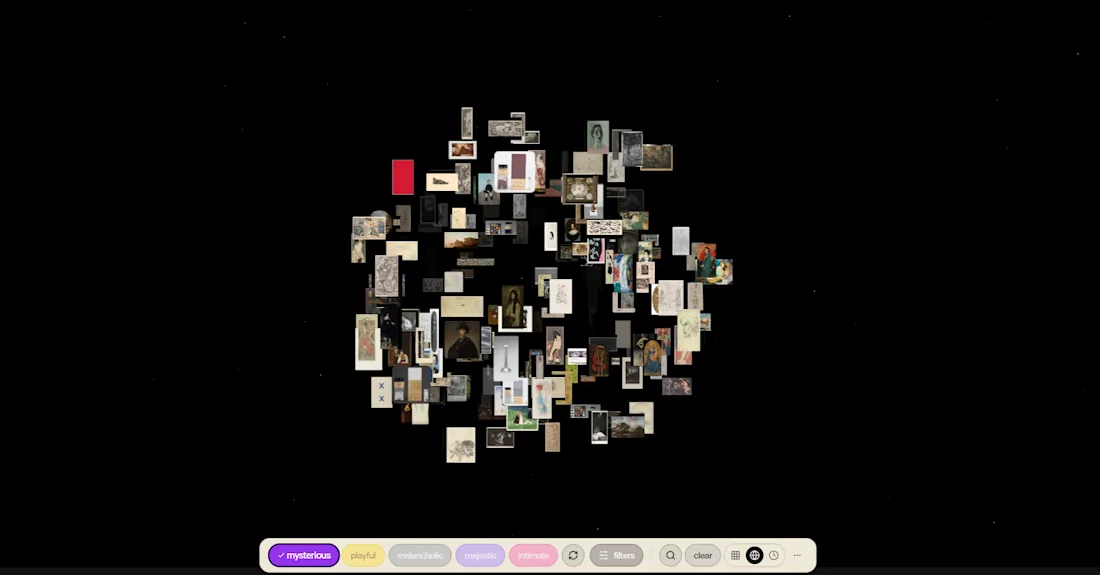
From this emotional starting point, users can gradually refine their exploration using more traditional filters. The combination of subjective and structured navigation creates a layered experience: one that begins with instinct and if desired, moves towards clarity. The subjectivity of this system is its unique strength. The same user might return on different days, in different moods, and discover entirely new works each time. In this sense, 10M transforms exploration into something dynamic and personal—less about retrieval, and more about discovery. The need for a discovery-first interface is crystal clear: within 30 days of launch, over 30,000 unique visitors have explored cultural heritage using 10M.
Anorak: between logic and poetry
The platform Anorak requires a more decisive approach to exploration, positioning the user between two points - logic and poetry -, and asking them to move towards one of the poles. Moving through this space, users influence how artworks are presented to them —shifting between more structured, metadata-driven connections and more abstract, associative ones. Developed by Austrian developer Michael Wilhelm, this project integrates with the Europeana Search and Record API and features works made available through Europeana.eu exclusively.
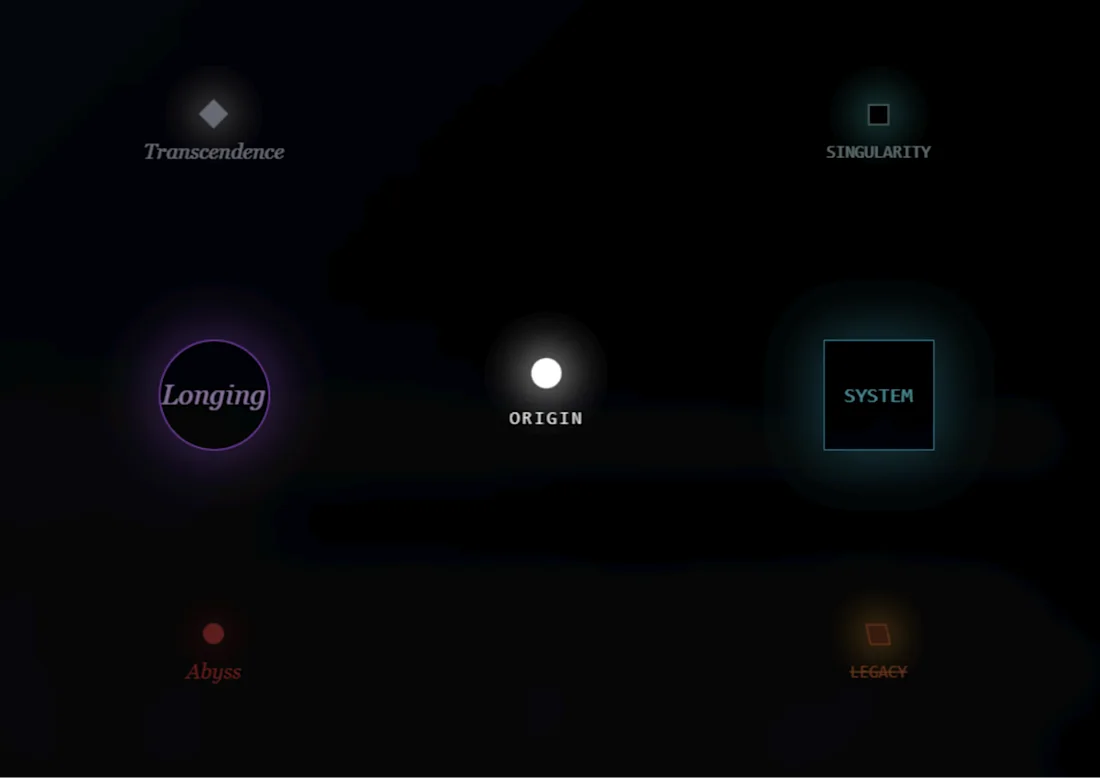
In this environment, the user is partially at the mercy of the algorithm. Rather than fully controlling the outcome, they collaborate with it—adjusting their position until they find a balance that feels right. Once there, they can request more artworks that match their chosen point between logic and poetry.
This way of navigation increases the likelihood of encountering the unexpected. By stepping away from strict categorisation, Anorak reveals connections that might otherwise remain hidden, encouraging users to wander rather than search.
Cultural heritage as play
Both projects shift the exploration of cultural heritage from search to play. Instead of treating cultural heritage as something to query, they invite users to explore it as a space of curiosity and experimentation.
The unpredictability is key. In Anorak, each interaction can feel like pulling a slot machine—never quite knowing what will appear next. In 10m, navigating through an emotional ‘cloud’ creates a similar sense of anticipation. This element of play transforms exploration into a more engaging, game-like experience.
This gamification also lowers the barrier to entry. Users do not need specialist knowledge or familiarity with institutional terminology to begin. Everyone knows what it means to be feeling sad, but not everyone knows how to navigate complex metadata fields. In this way, alternative wayfinding makes cultural heritage more accessible to a broader audience.
These systems also open up new possibilities for creative reuse. Artists, designers, writers, and educators can use them as tools for inspiration—discovering unexpected works that can spark new ideas, projects, or narratives.
An anti-movement in a predictable world
In a digital environment increasingly shaped by efficiency and predictability, these approaches feel almost like an ‘anti-movement’. Where most systems aim to deliver fast, precise results, alternative wayfinding embraces slowness, ambiguity and attention.
Exploring in this way requires presence. Users must engage more actively with what they see, taking time to interpret and decide where to go next. The process is less about reaching a destination and more about experiencing the journey.
This mode of exploration is enabled by an additional interpretive layer built on top of Europeana’s API content. Projects like Anorak and 10m apply their own algorithms to introduce qualities such as emotion or poetic association—dimensions that are not explicitly included in the metadata received by institutions.
While these interpretations are not authoritative, they open up space for subjectivity. They surface relationships and meanings that traditional classification systems may overlook, offering new perspectives on familiar collections.
Expanding beyond the echo chamber
In a world where algorithms reinforce what we already know, alternative wayfinding offers a different way. Instead of narrowing our view, it expands it—introducing randomness, curiosity, and surprise into the experience of discovery.
Projects like the two presented here, demonstrate how cultural heritage can be explored in ways that are less predictable and more imaginative. By moving beyond the search box, they invite users to engage with collections in richer, more personal ways—expanding knowledge, sparking creativity, and reintroducing a sense of wonder into the digital cultural heritage space.
Get involved
Are you interested in using Europeana’s APIs to integrate cultural heritage data into a tool or product? Find out more and get an API key and discover other ways that Europeana’s APIs have been used to support innovative discovery of cultural heritage.
If you’d like to explore more approaches to creatively sharing cultural heritage collections, register for Europeana’s Digital Storytelling Festival on 19 - 20 May!